The Jim and Vanita Oelschlager
Native American Ethnographic Collection
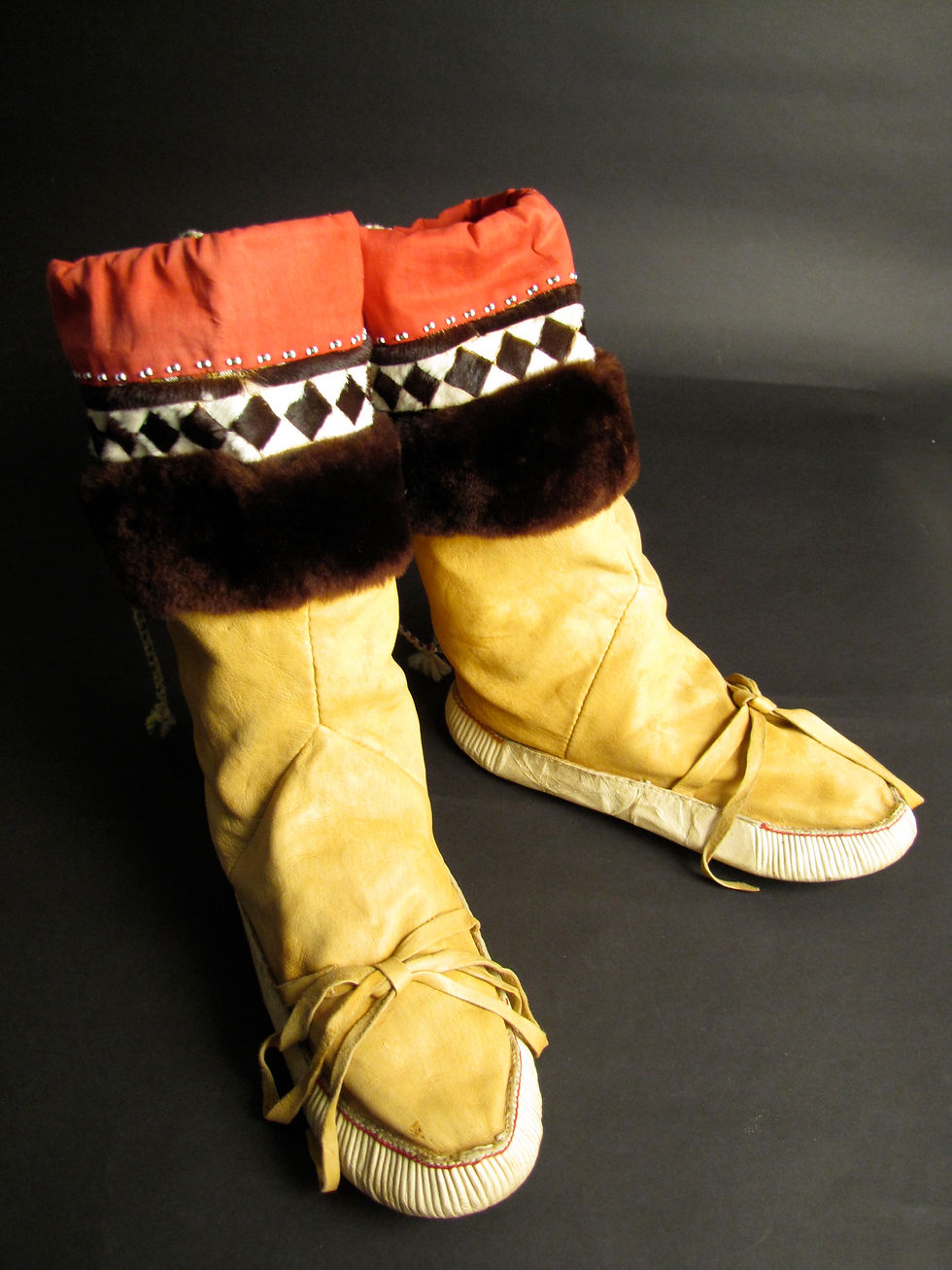
Women’s Muk Luks, ca. 1990 Alaska. Leather, Fabric, Ribbon, Hide. 13" x 6.5" x 13"
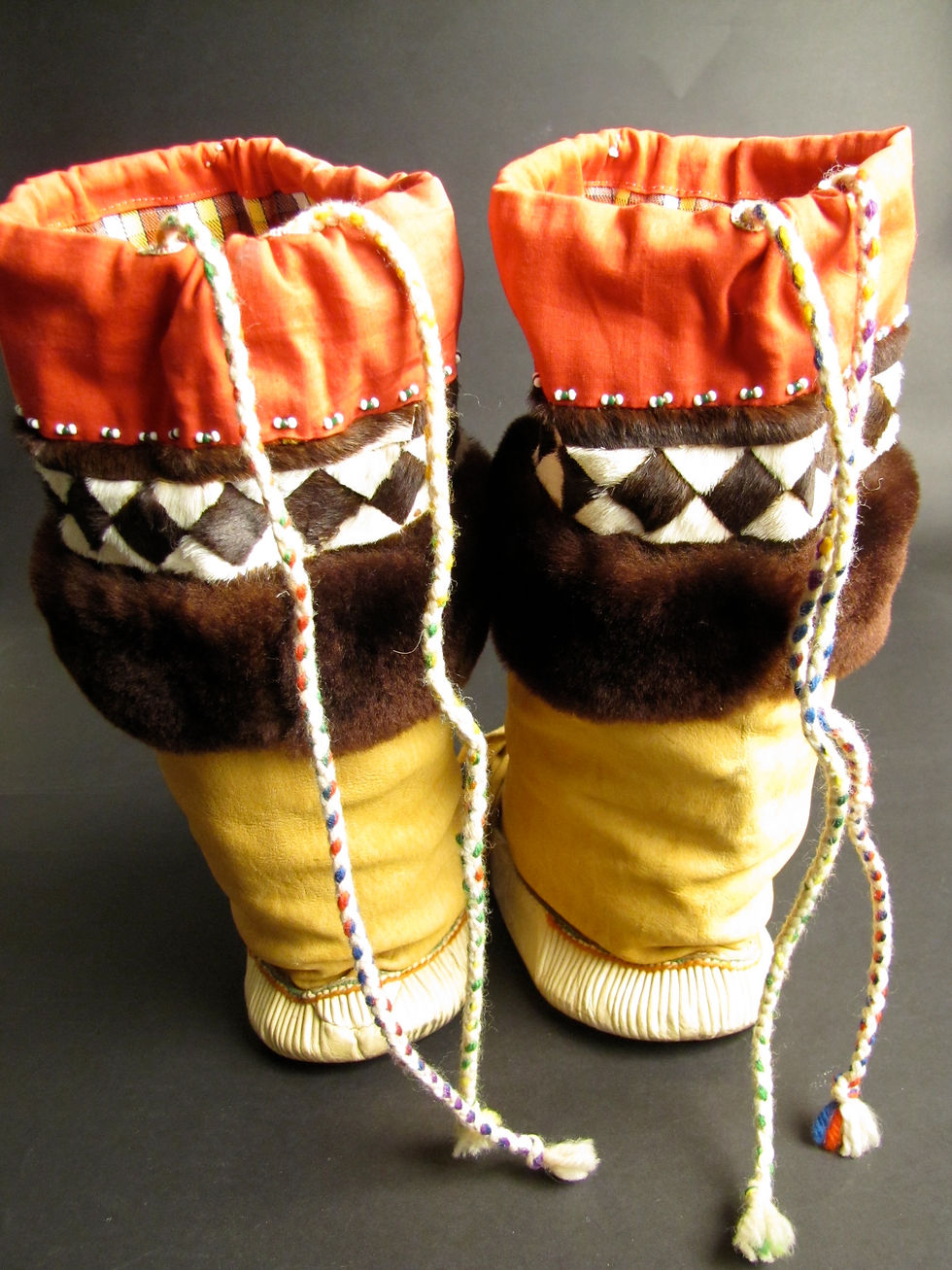
Women’s Muk Luks, ca. 1990 Alaska. Leather, Fabric, Ribbon, Hide. 13" x 6.5" x 13"

Women’s Muk Luks, ca. 1990 Alaska. Leather, Fabric, Ribbon, Hide. 13" x 6.5" x 13"
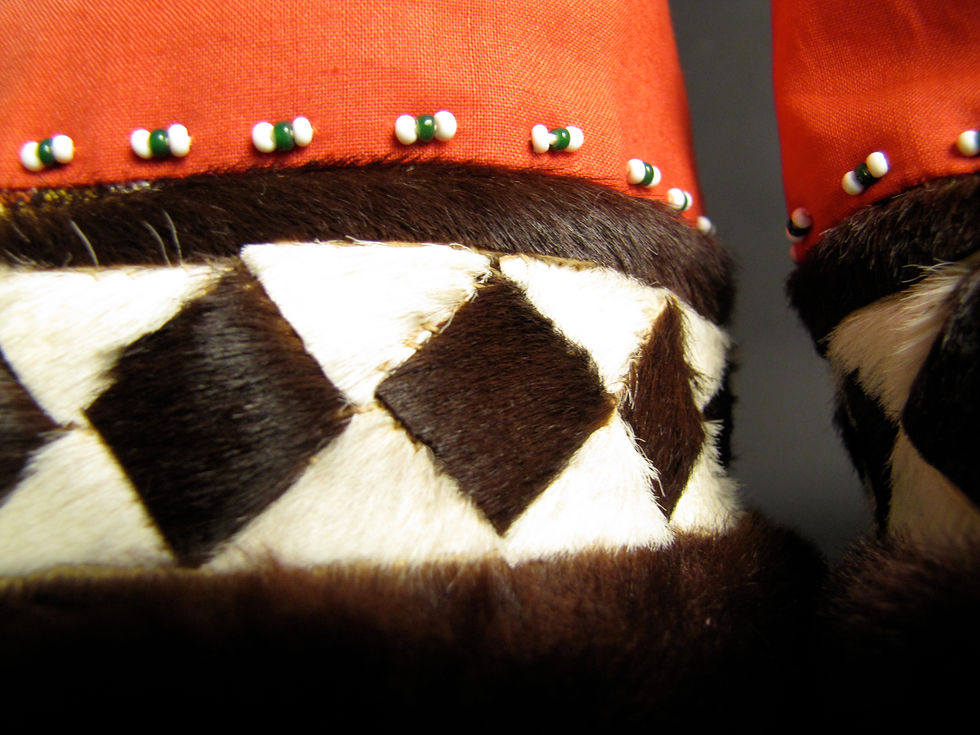
Women’s Muk Luks, ca. 1990 Alaska. Leather, Fabric, Ribbon, Hide. 13" x 6.5" x 13"

Women’s Muk Luks, ca. 1990 Alaska. Leather, Fabric, Ribbon, Hide. 13" x 6.5" x 13"

Women’s Muk Luks, ca. 1990 Alaska. Leather, Fabric, Ribbon, Hide. 13" x 6.5" x 13"

Women’s Muk Luks, ca. 1990 Alaska. Leather, Fabric, Ribbon, Hide. 13" x 6.5" x 13"

Women’s Muk Luks, ca. 1990 Alaska. Leather, Fabric, Ribbon, Hide. 13" x 6.5" x 13"
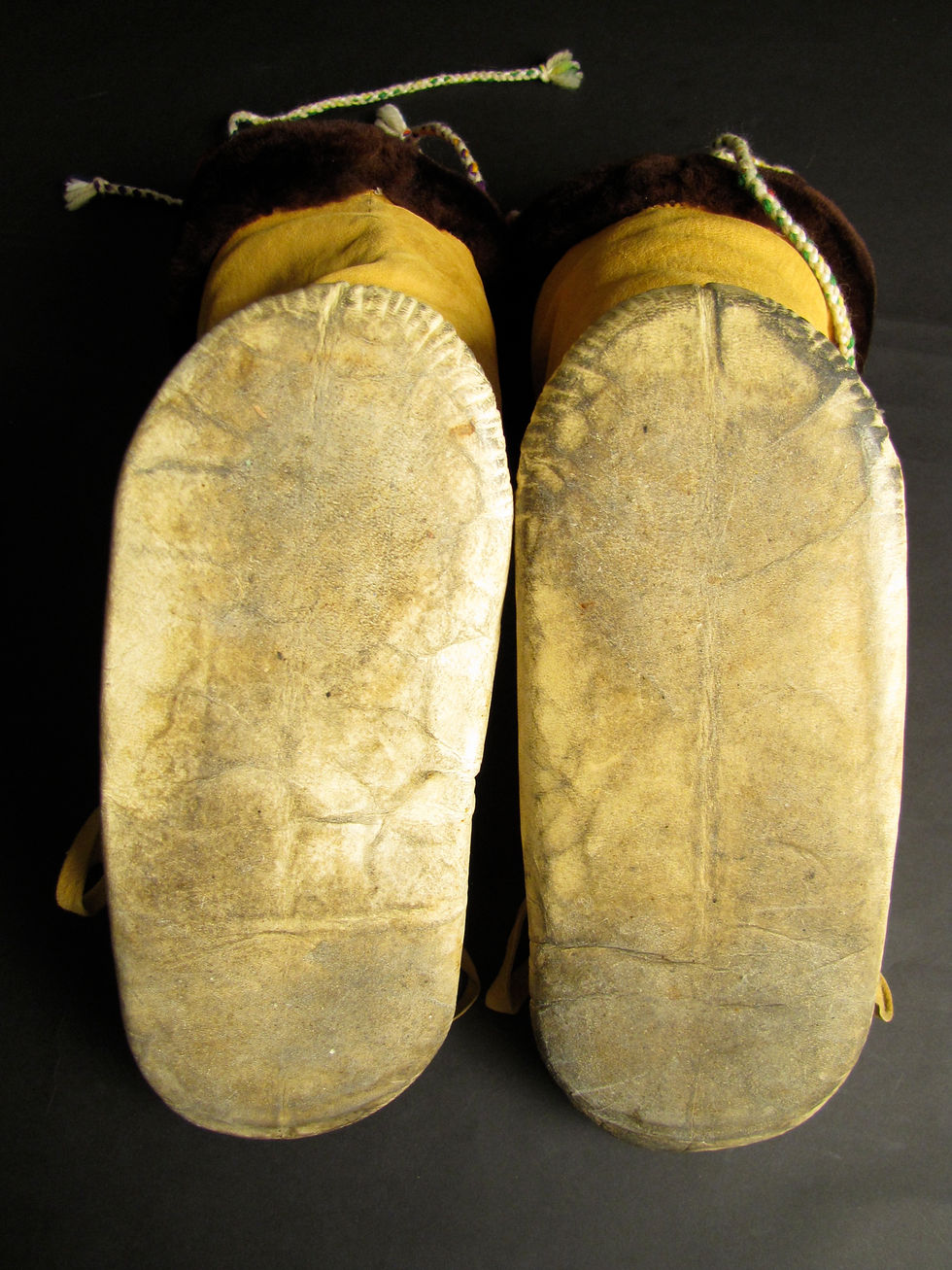
Women’s Muk Luks, ca. 1990 Alaska. Leather, Fabric, Ribbon, Hide. 13" x 6.5" x 13"
Cultural objects exhibited here are examples of tools and clothing used throughout the northern regions.
The tools here are examples that are basic to life in a harsh environment; the lines made of walrus hide, the knives and “bear paw” snowshoes are all used in hunting and fishing. The mukluks represent clothing still used today.
Baskets were used in traditional northern native cultures for utilitarian purposes. Currently baskets, using traditional materials and techniques are made for museums and collectors.
Evelyn Douglas, a Yupik artist from Hooper Bay Alaska, made the two baskets in this collection. She is recognized as a master of techniques and unique patterns, as illustrated by these tightly woven baskets. They are made of sea-ryegrass from the marshy plain in the Yukon-Kuskokwim Delta.
The village of Hooper Bay is noted for these coiled-grass baskets.