The Jim and Vanita Oelschlager
Native American Ethnographic Collection

Holy Man I ca. 1970s Artist: E.J. Tom Navajo Sandpainting. Wood, Glue, Sand. H7” x W5”
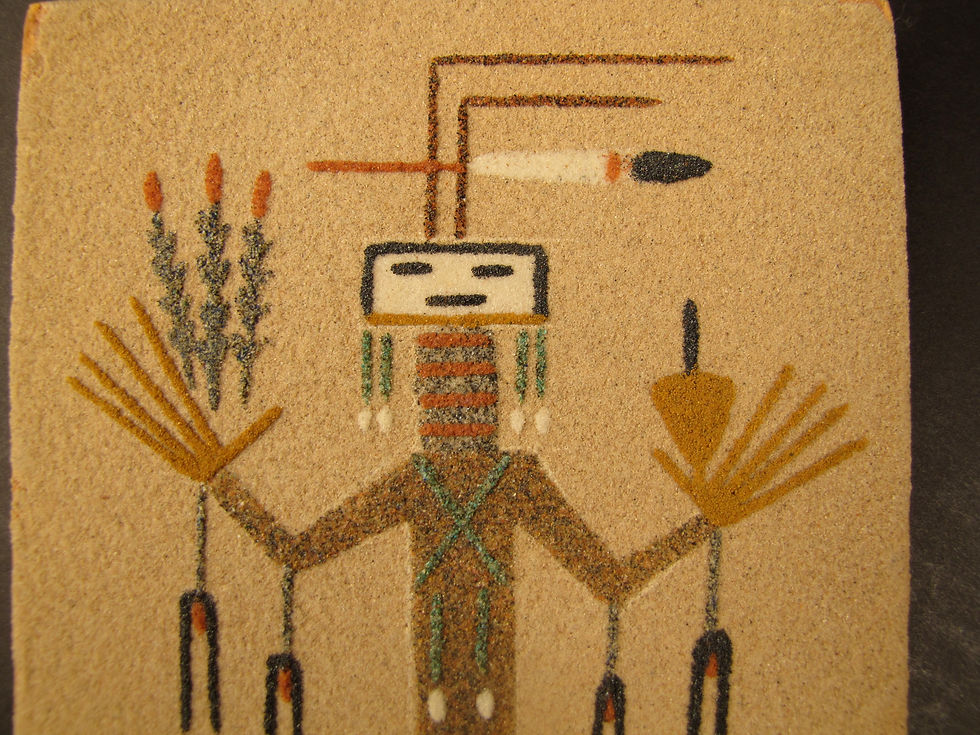
Holy Man I ca. 1970s Artist: E.J. Tom Navajo Sandpainting. Wood, Glue, Sand. H7” x W5”

These portable sandpHoly Man I ca. 1970s Artist: E.J. Tom Navajo Sandpainting. Wood, Glue, Sand. H7” x W5”aintings became popular with tourists and traders and provided income where wage jobs were rare. Three types of markets emerged: some were sold as small souvenirs, others for home decorating, and others as fine art for collectors or exhibits. The sandpaintings in this exhibit were probably made for the home décor market.

Holy Man I ca. 1970s Artist: E.J. Tom Navajo Sandpainting. Wood, Glue, Sand. H7” x W5”

Holy Man II ca. 1970s Artist: E.J. Tom Navajo Sandpainting. Wood, Glue, Sand. H7” x W5”

Holy Man II ca. 1970s Artist: E.J. Tom Navajo Sandpainting. Wood, Glue, Sand. H7” x W5”

Holy Man II ca. 1970s Artist: E.J. Tom Navajo Sandpainting. Wood, Glue, Sand. H7” x W5”

Holy Man II ca. 1970s Artist: E.J. Tom Navajo Sandpainting. Wood, Glue, Sand. H7” x W5”
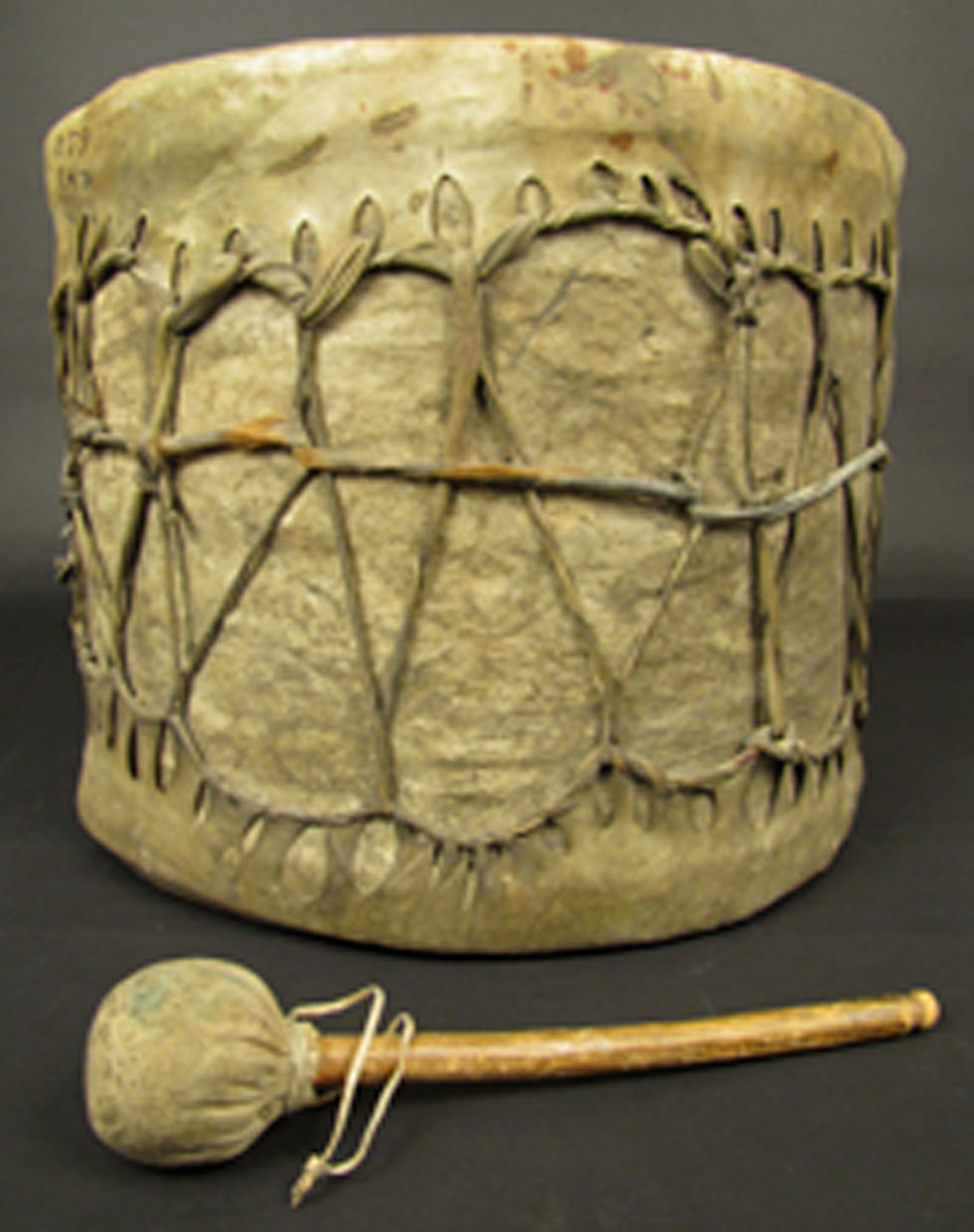
Drum ca. 1880 Pueblo, Arizona. Wood, deer hide. a: 12.5” x 15” b: 10.5” x 2’’
Navajo sandpainting holds an important place in religious tradition, especially healing.
Traditional sandpaintings, drawn with ground sandstone, accompany a curing ceremony. The supernatural figures depicted in sandpaintings are called forth by a Singer’s chant to cure the patient. The paintings are erased after the ceremony.
The Navajo elders and singers were convinced by anthropologists and traders that the images could be used in a different form by altering the sacred drawings slightly, without calling forth the holy people. In 1960, a Navajo singer from Sheep Springs, New Mexico, Fred Stevens, Jr., developed a method of gluing the dry pigments to wooden backgrounds. By 1962, he had taught at least four family members the technique. Soon the technique spread through the extended family beyond Sheep Springs.
These portable sandpaintings became popular with tourists and traders and provided income where wage jobs were rare.
Three types of markets emerged: some were sold as small souvenirs, others for home decorating, and others as fine art for collectors or exhibits. The sandpaintings in this exhibit were probably made for the home décor market.
A headdress such as this would have been used in Native American gatherings from the Southwest to the Great Lakes at festive ceremonial occasions involving many different tribes. It might also have been used in a reenactment theatrical event. This headdress was made in the late 1940s in the four corners area, where New Mexico, Arizona, Utah, and Colorado all join. It was purchased there, and through inheritance it resided in Erie, Pennsylvania for many years, then Grand Blanc, Michigan.
The turkey feathers are attached to the zigzagged edge of a strip of felt. The fluffy down of the turkey is dyed red and has strands of horsehair attached. The felt is decorated with fine beadwork. The white strips of fur decorating the front of the headpiece are from the winter coat of a mink.